


Plugins
Plugins connect EvoX to external services, domain tools, and reusable workflows. Built-in plugins, custom plugins, and MCP servers share an extension-management surface, but each connection and permission still controls what it can read or change.
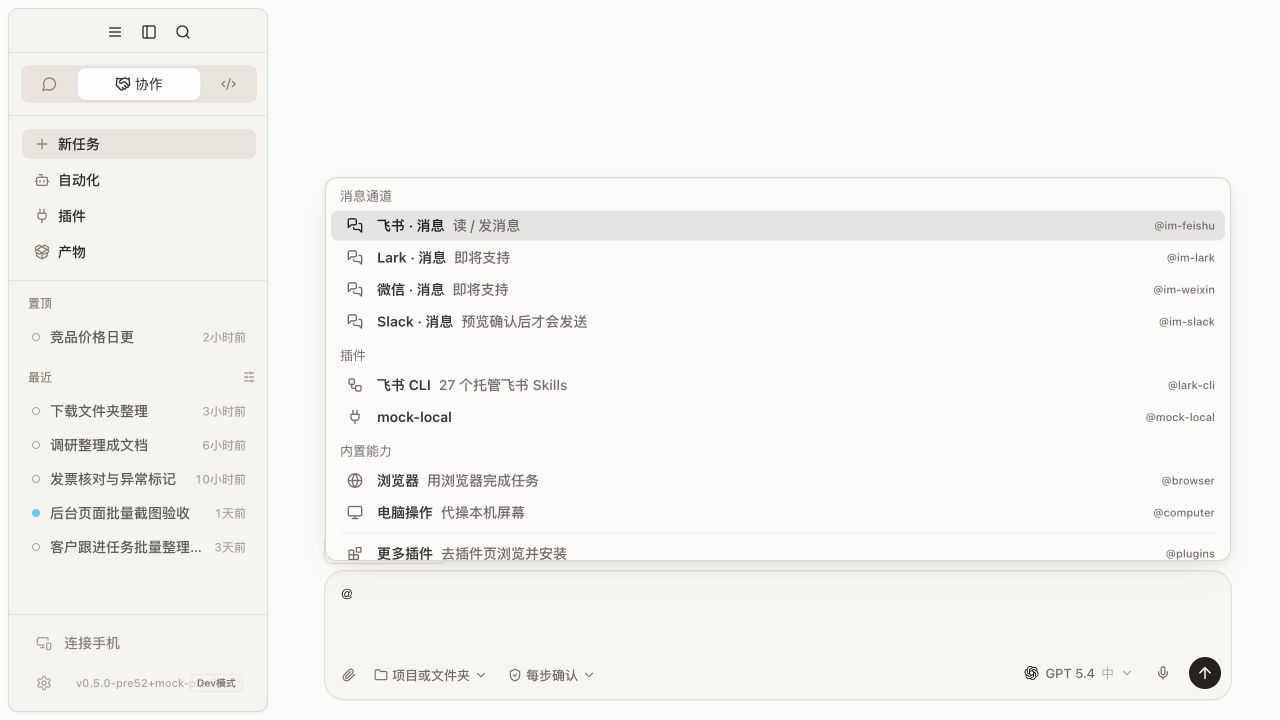
Find and install
Browse the plugin directory or manage the installed list from Extensions. Before installation, review the provider, purpose, account requirements, available tools, external writes, and possible cost.
Built-in plugins can usually be enabled or disabled but not uninstalled like third-party plugins. Custom MCP servers need a valid process, URL, or transport configuration.
Connect and test
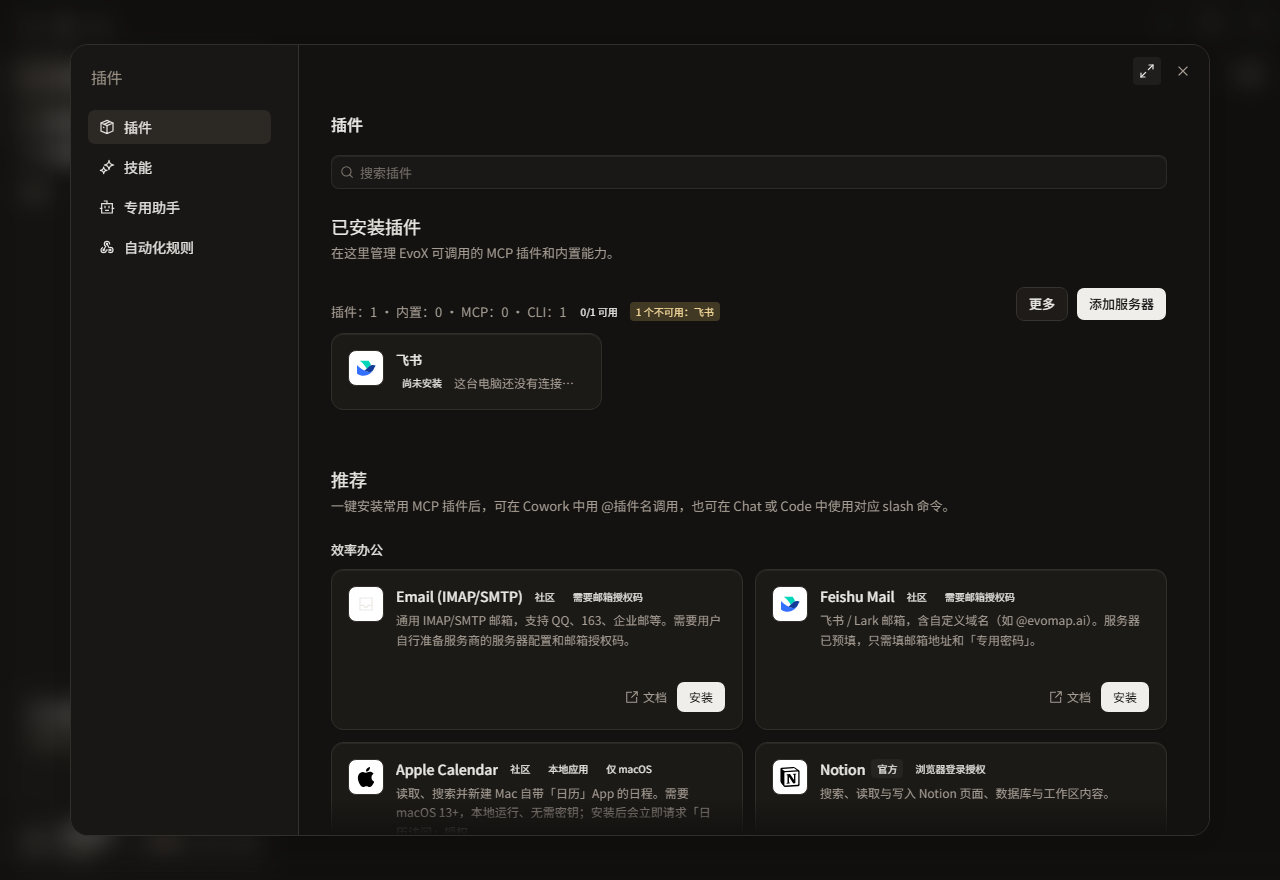
Open the plugin, configure the required connection through dedicated credential settings, save, run a connection test, inspect server state and tools, and complete one low-risk read before approving writes.
Use a plugin
Cowork can select plugins from its plugin list. Chat and Code may require an @plugin mention, /mcp, or a plugin-specific command. A disabled, disconnected, or unconfigured plugin should expose a recovery route rather than silently switching services.
Plugin capability boundaries
A plugin can call only the tools it exposes. For example, a calendar plugin may read or create events, while a document plugin may work with connected files. Whether a plugin can operate a particular application depends on its declared tools and permissions. Installing a plugin does not grant screen reading, mouse movement, or general control of desktop applications.
Permissions
- Reading external data is different from writing to an external service.
- A project does not automatically grant plugin-account access.
- Sending, deleting, publishing, purchasing, and remote asset creation retain approval.
- A disabled plugin should stop requests and stop using its credentials.
Use /mcp for the unified server-status panel. /skills opens skill management; neither command is the same as the plugin directory.
EvoX Docs · Features · Capabilities