I’m Lena, and the part I paused on is the word max. Meta says Muse Spark 1.3 with max reasoning is available in Muse Code and the Meta Model API, but a higher reasoning setting is not automatically a better coding agent. The useful question is narrower: on one long-horizon repository task, does max reasoning finish more of the job with fewer human corrections, without pushing latency and total task cost past what the extra completion quality is worth?
I do not have matched access data for standard and max reasoning under one fixed harness, so I’m not going to pretend this is a hands-on benchmark. This is an evidence-based evaluation plan built from Meta’s current public material and the controls a technical team should record before making a deployment decision.
Quick Verdict for One Long-Horizon Coding Task
My current read is that Muse Spark 1.3 max reasoning is worth testing, not assuming. Meta’s September 2 release says the model was trained for longer-horizon agentic and coding work, better instruction retention, self-correction, and asking for help when stuck. Meta also reports that, compared with Muse Spark 1.2 in internal engineering comparisons, version 1.3 used about 20% fewer tool calls and 25% fewer tokens. Those are vendor-reported generational gains, not proof that max reasoning beats a lower reasoning setting on your repository.
That distinction matters. Meta’s Muse Spark 1.3 release note confirms max reasoning availability and describes the model-level improvements, while the same Muse model page positions the model for long-horizon agentic workflows and coding. Neither public page gives me a same-task, same-harness standard-versus-max experiment that settles the operational question.
If max produces a more complete patch with less intervention, the extra reasoning may be useful. If both settings pass the same tests and max merely waits longer or consumes more billed work, it is harder to justify.
Define the Repository Task
A long-horizon coding-agent comparison gets noisy quickly if the task is vague. I would choose one repository change that is large enough to require planning, code reading, tool use, and recovery, but small enough that a human can judge the finished state.
A good example is a contained feature change across an API handler, validation layer, and test suite. The task might require adding one optional request field, preserving backward compatibility, updating a serializer, adding tests, and touching no unrelated files. The agent may inspect the repository, edit files, run existing test commands, and read failures. It should not change CI configuration, credentials, or deployment settings unless the brief explicitly allows it.
Change Scope, Tests, and Acceptance Criteria
Freeze the prompt before either run. Freeze the repository commit, tool set, environment, timeout, network access, and test commands too. Acceptance criteria should be equally fixed: relevant tests pass; no unrelated tests regress; the public interface stays backward compatible; only approved files change unless necessary; and the final response explains what changed and what was verified.
The artifact to score is the repository state, not the confidence of the final prose. Review the diff, test output, lint or type-check results, and any remaining TODOs. If the agent says “done” while a hidden regression remains, the task is incomplete.
Compare Reasoning Effort on the Same Task
Run the lower reasoning setting and max reasoning from the same clean commit. Give them the same prompt and tools. If either run asks a genuinely required clarifying question, answer both with the same information and record that intervention.
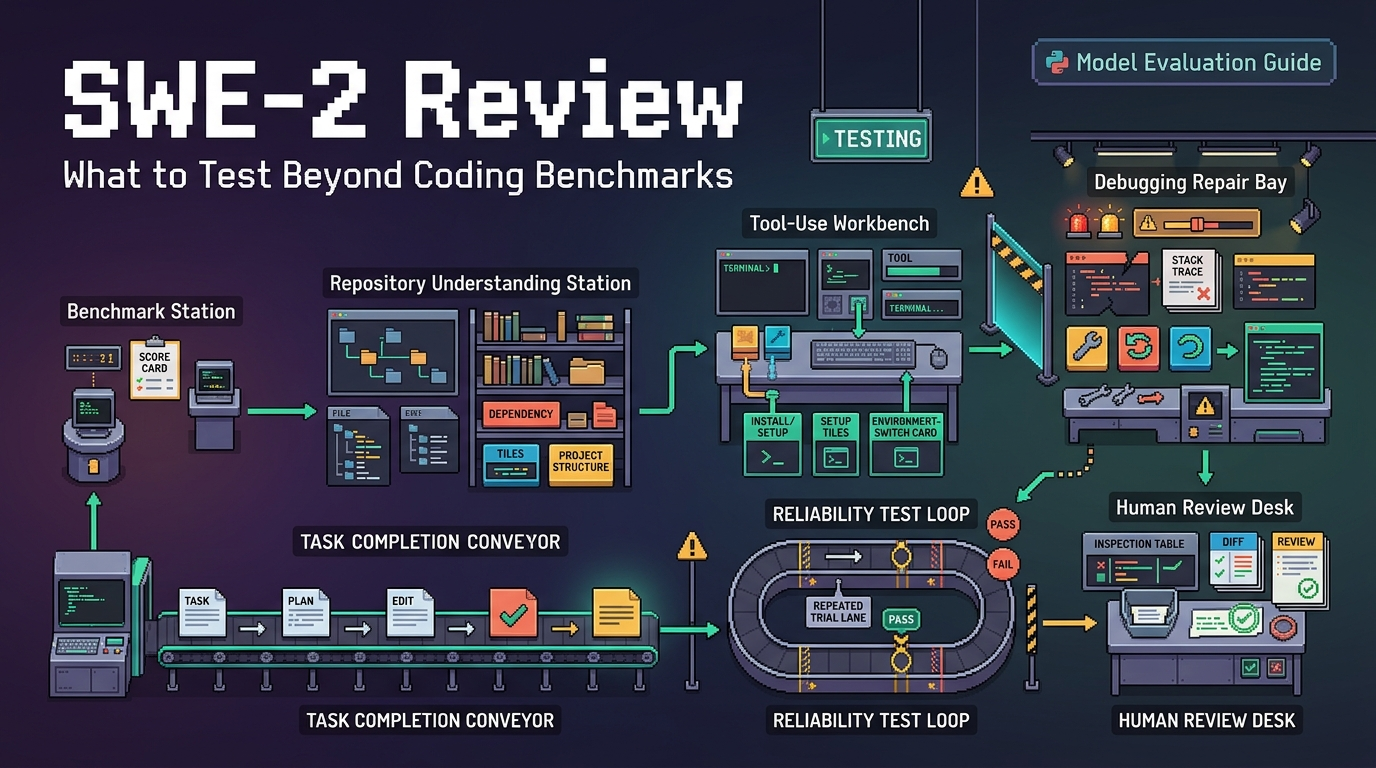
The comparison should focus on completion first. Did the agent find the right files, preserve constraints, implement the change, run the correct checks, notice failures, recover, and stop in a state a reviewer could merge? A max-reasoning run that produces a sophisticated plan but still needs three human corrections has not clearly beaten a simpler run that lands a clean patch.
Completion Quality and Operator Intervention
Track intervention separately because long-horizon agents can look capable while shifting work back to the operator. Count every moment where a human must redirect the agent, explain a repository fact it could have discovered, repair a broken tool state, or tell it to run a test it should have run.
Separate necessary approvals from rescue. An approval before a consequential action is a safety feature; a rescue after the agent edits the wrong subsystem is a quality failure. Mixing them makes a safer setup look worse.
This is where max reasoning could help: better constraint retention or recovery may reduce rescue interventions. But I would want the run log before believing it.
Latency, Token Use, and Total Task Cost
Do not compare only “time to first answer.” A coding agent is a loop. Measure wall-clock time from task start to accepted completion, model tokens, tool calls, failed calls, retries, test executions, and human waiting time.
I’m deliberately not printing a numeric Meta API price here. I could not verify the current rate card from an accessible official pricing page during this research pass, and I do not want to copy a number from a secondary catalog into a production-facing article. Before publication, check the live Meta developer pricing and rate-limit information for your account and region.
The useful formula is total task cost = model usage + tool or sandbox cost + operator time + rerun cost. Max reasoning can be cheaper per completed task if it reduces retries or intervention enough to offset the difference. It can also be the opposite.
Separate Model Gains from Agent-System Support
This is the part I keep coming back to. A Muse Spark 1.3 agent is not just Muse Spark 1.3. The model reasons and chooses actions; the surrounding system decides what context survives, which tools exist, how permissions work, what gets retried, and what happens after failure.
Meta says Muse Spark 1.3 was trained to ask for help when stuck, preserve long instructions better, resist prompt injection more strongly, and confirm before consequential actions. Useful. But completion still depends on the harness maintaining repository state, surfacing test failures, protecting credentials, constraining file access, and letting the agent recover without losing the thread.
State, Permissions, and Recovery
For the comparison, log whether each run can resume after a failed command, whether tool output remains available, whether the agent can distinguish a timeout from a test failure, and whether it can return to the last safe state after a bad edit.
Security belongs to the same evaluation. A stronger model can improve judgment, but deterministic permissions, scoped credentials, approval gates, network controls, and rollback are still system responsibilities. That separation is important when reading vendor safety claims: model behavior and harness safeguards are related, but they are not the same thing.
Something shifted slightly when I looked at the release this way. “Max reasoning” stopped looking like a product verdict and started looking like one variable inside a controlled system.
Limits and Trade-Offs
Three limits stay visible. Meta’s efficiency claims for 1.3 versus 1.2 are vendor-reported and do not answer lower-versus-max reasoning. Public benchmark results can be useful capability evidence, but different harnesses, tools, task sets, and reasoning settings can move the result, so I would not turn a leaderboard into a production SLA.
I also could not confirm from the public pages I reviewed an immutable Muse Spark 1.3 snapshot ID, a concrete retention window for every Meta Model API tier, or a complete audit-log schema for reasoning settings and tool calls. Those are procurement questions. If a team cannot record the exact configuration it ran, it cannot reproduce the comparison later.
This article does not imply that EvoX or EvoMap currently integrates Muse Spark 1.3. The evaluation framework applies to coding-agent systems generally.
FAQ
Where is Muse Spark 1.3 max reasoning currently available?
Meta’s September 2, 2026 release says Muse Spark 1.3 with max reasoning is available in Muse Code and the Meta Model API. I would still verify account and regional availability immediately before a production test.
Can teams pin a Muse Spark 1.3 model snapshot?
I could not confirm a public immutable snapshot-pinning contract from the current pages I reviewed. Do not assume the human-readable “Muse Spark 1.3” label is a dated build. If reproducibility matters, record the exact model identifier returned by the API and ask Meta whether a stable snapshot or version pin is supported for your account.
What data-retention controls apply to Meta Model API requests?
The public launch and model pages I could verify do not state a concrete retention duration. I would not invent one. Before sending proprietary code, confirm the current data-use and retention terms in the Meta developer portal for the exact API tier you use, and keep Muse Code terms separate from raw Model API terms.
Which logs identify the reasoning setting and tool calls for each run?
The public Meta pages I reviewed do not expose a complete logging schema for this comparison. Your harness should record requested reasoning effort, returned model identifier, run ID, token counts, tool name, safe arguments or a hash, result status, duration, retries, approvals, and recovery events. OpenTelemetry’s GenAI observability guidance shows how model calls, token usage, and tool spans can be represented consistently; sensitive prompt and tool content should remain opt-in.
Can Meta safety controls pause a long-running coding task?
Meta says Muse Spark 1.3 is better calibrated around irreversible actions and can ask for help or confirmation before consequential steps. That supports interruption and approval patterns in an agent harness, but I would not treat it as a universal API-level pause guarantee. The actual stop, approval, timeout, and resume behavior needs to be verified in Muse Code or in the runtime around the Model API.
For me, that is where the reasoning effort comparison should end: not with “max wins,” but with a run record showing whether it completed more work, needed less rescue, and justified its latency and cost. I’m not ready to close this one from vendor claims alone. A fixed repository task will tell you more.
Previous Posts:
- If you want to compare Muse Spark 1.3 with another model-level reliability question, Claude Opus 4.7 agent reliability examines why stronger reasoning still needs task completion, recovery, and human review evidence.
- For the harness layer behind any reasoning-effort comparison, AI agent harness engineering explains how tools, state, tests, memory, orchestration, and evaluation shape real agent performance.
- To evaluate whether max reasoning is worth the latency and token use, AI agent deployment cost breaks down model usage, tool cost, operator time, reruns, and cost per accepted deliverable.
- If you need a cleaner way to design the fixed repository task, AI agent workflow step by step shows how agent work can move through planning, execution, validation, review, and follow-through.