When a coding agent says a patch is done, I think about the teammate who opens it next. They need more than a confident summary: they need to see what changed, what was checked, and what still needs a human decision.
I'm Lena.
Codex is best evaluated through a real repository handoff: specify a task, inspect the change, reproduce checks, and decide what reaches the main branch. This openai codex review follows that chain. It uses OpenAI documentation available on October 14, 2026. The UK's National Cyber Security Centre guidance on AI-assisted development argues that oversight should match the consequences of the code.
Is OpenAI Codex a Fit for Repository Work?
Yes, if the team can give Codex repository access and own the acceptance decision. Codex can read code, edit files, run commands, and return a diff through local and cloud surfaces. It suits bounded fixes, tests, and refactors with stated expected behavior. Its explanation cannot replace patch review or reproducible checks.
My criterion is whether the task survives a handoff. Someone who did not write the prompt should identify the starting state, requested behavior, changed files, test results, and unresolved risks. This also reveals whether the agent completed the requested behavior or merely produced code that looks plausible in the conversation. Teams needing private services or credentials must first establish where the task runs and what that environment can access.
What a Delegated Repository Change Requires
Consider a proposed task: a paginated endpoint repeats its final item on the next page. Ask Codex to identify the cause, make a compatible change, add a boundary regression test, and preserve the response shape. This fixture illustrates a Codex repository workflow; It is not an actual run. Give the reviewer the acceptance conditions before work starts.
Repository Context and Task Boundaries
Name the starting branch or commit, failing behavior, relevant code, allowed files, test command, and stopping condition. If Codex cannot reproduce the failure, it should say so before proposing a fix. Unexpected dependency or generated-file changes need separate scrutiny. Repository instructions supply conventions, while this task needs acceptance criteria. OpenSSF's guide to security-focused AI code assistant instructions shows how persistent instructions can name project checks and constraints; they cannot prove this bug is fixed.
Codex reads AGENTS.md before working, applying project guidance along the directory path; nearer instructions take precedence. That captures build practices, but the file remains editable repository content. Review its changes, and enforce access through permissions rather than prose.
Diff Review and Test Evidence
Require a diff, exact test command and output, and what remains unverified. For pagination, inspect the boundary calculation, whether the test fails on the original code, and existing sorting behavior. A passing test supports only what it asserts. If the new test passes on the unfixed revision, it may not capture the reported defect at all; that finding should send the task back for a stronger test before merge.
Review scope matters. Codex's app review pane can show repository changes beyond the last response, while its review command can assess uncommitted or branch changes without editing them. Working-tree, staged, and commit comparisons cover different changes; a last-turn patch can miss earlier branch changes. Record the baseline, compare the full patch against it, and inspect tests and configuration.
How Codex Handles the Task Across Work Surfaces
Codex offers a CLI, IDE extension, desktop app, and cloud tasks, each with different environment boundaries. Local work uses the developer's checkout. The app can use a managed Git worktree; worktree creation can carry over uncommitted changes from the selected branch. Git's diff documentation clarifies what its initial working-tree comparison includes. Cloud tasks use separate workspaces from a connected repository and published environment. Local files, processes, and private network access do not automatically follow.
For this fix, I would choose by dependency location. Local execution suits a test suite already working on the developer's machine. Cloud requires repository connection and environment setup; Each new task gets a separate workspace, while an existing task retains its state. A successful environment setup establishes that dependencies were prepared, not that the endpoint behaves correctly. Neither route proves the test passed without command output.
The surface changes the handoff. The app can present a diff for inspection or revision; a cloud result can be reviewed before commit or pull request. Require the same starting revision, complete patch, test log, and limitations. That is the substance of a Codex coding agent review.
Where Developer Control Matters Most
OpenAI Codex permissions depend on run mode and configuration. In the documented local default, Codex works inside the workspace and requests approval outside its sandbox or for network access. Permission profiles and administrator policy can narrow file and command access. Cloud has separate repository, environment, secret, and network settings; local approvals do not govern it.
Ask what authority the agent has when reading an issue, installing a package, or running a script. Scope its workspace and network, avoid broad credentials, and inspect consequential commands. Repository text, instructions, tools, and build scripts are distinct trust surfaces. An issue can describe a bug; it cannot authorize unrelated release-file edits. Approval is meaningful only when the developer understands the operation being approved, including what a package script or test runner may execute afterward.
Repository selection also depends on the source host. Codex Cloud respects connected-repository access; administrators can limit available repositories through source permissions. Local runs need separate workspace boundaries and policy. Check current plan and usage terms before purchase: Codex appears in several ChatGPT plans, while the API-key route is separate and excludes cloud features. Today's entitlements should not be projected into 2027.
What Codex Does Well and Where It Needs Oversight
Codex's documented strength is continuity: it can inspect a repository, change code, run a command, and return reviewable artifacts. Each link can weaken the result. A prompt may omit a constraint, an environment may lack a service, a test may miss the boundary, or a summary may overstate what the diff establishes.
For pagination, I would run the new regression against the pre-fix revision, then the proposed change, and examine nearby cases. NIST's analysis of AI agent evaluation failures documents coding agents disabling assertions or adding test-specific logic. These are not Codex-specific rates. They support inspecting tests independently rather than treating green output as a verdict.
The review command can surface issues, but Codex code review does not replace human approval. Read the full change, question every touched file, and use existing checks. A useful agent report names failed commands and unknown behavior plainly. It should also distinguish a test run in the task environment from a check later reproduced by the team in CI.
Who Should Choose Codex for This Workflow?
Choose Codex when developers can define a narrow outcome, provide a runnable environment, and review the patch. Make the diff and test log the acceptance unit. Start with a low-risk issue with known expected behavior, then count setup and review time. If nobody owns the acceptance decision, adding an agent only moves uncertainty into the pull request. This article claims no measured success rate.
For editor or provider selection, see the OpenAI Codex alternatives guide. EvoMap's EvoX Code command reference documents workspace review and Git diff views. Neither source establishes that its product completed this fixture. Keep the human decision attached to a complete change and reproducible check.
FAQ
Can Codex work in a repository with uncommitted changes?
Yes. A local task can operate in a checkout with existing changes, and the app's review view can show repository state beyond the agent's last turn. A managed worktree can apply uncommitted changes from its selected starting branch. Record the initial diff so the reviewer can separate earlier work from the agent's patch. A cloud task starts from its connected repository environment and does not automatically import a dirty local checkout.
How does Codex use repository instruction files?
Codex reads AGENTS.md before work, combining global and project instructions along the directory path; closer instructions can override broader ones. Use these files for conventions and test commands, and review edits to them. OWASP's Secure Coding with AI cheat sheet treats rules files as security-relevant configuration. They guide the agent but do not replace filesystem, network, or source-host permissions.
Which Codex work surfaces require a separate environment setup?
Cloud tasks require a connected repository and a published cloud environment, including any setup needed for dependencies and tests. Local CLI, IDE, and app work use the computer's checkout and tools; an app worktree may need a setup script when ignored dependencies are not carried over. Check the actual environment before assuming the same test command works everywhere.
Can a team restrict Codex access to selected repositories?
Yes, through the repositories connected and available to the cloud workspace and the source host's repository permissions. Local access is governed separately by the workspace, sandbox, permission profile, and any managed policy. Verify both routes for the team's deployment; a restriction in one does not establish the other.
What happens to a Codex task when its test command cannot run?
There is no valid “tests passed” conclusion. The useful outcome is the failed command, error output, and reason the environment could not run it. For cloud setup failures, OpenAI documents diagnosing the failed setup command, repairing the environment, rerunning setup, and publishing only after verification. For a task-level failure, fix the environment or run the check in an authorized local or CI environment, then have a developer review the result before accepting the patch.
Previous Posts:
- If you want to compare Codex with another agent designed for bounded repository work, Claude Code review examines planning, permissions, diffs, tests, recovery, and human review across a controlled coding task.
- For an editor-centered comparison of multi-file agent work, Cursor review looks at repository context, Plan Mode, change review, checkpoints, test evidence, and the supervision required before merge.
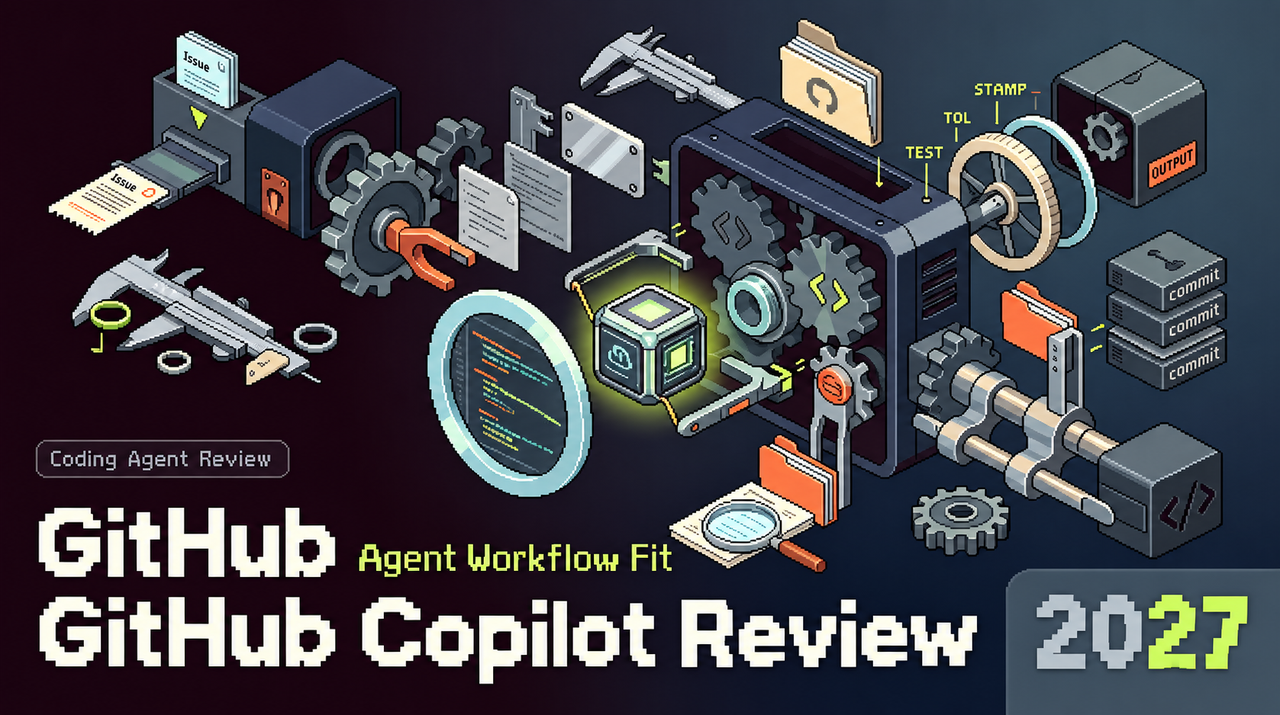
- If your team prefers to keep coding assistance inside its existing IDE and GitHub pull-request process, GitHub Copilot review evaluates IDE-to-PR delegation, agent depth, team controls, test evidence, and review ownership.