The useful dividing line among the best autonomous AI agents is not whether they can take several steps. It is whether a team can let a task continue, change midway, and explain what happened at the end. I keep coming back to that because a polished answer is not enough when the work lasts for hours, returns every Monday, or touches a repository and someone else must accept it.
I'm Lena. This commercial-investigation shortlist is for technical users and operations teams. I reviewed public product, price, permission, schedule, run-record, and recovery documentation on September 22, 2026. I did not buy plans, attach business credentials, or run a matched live task. This compares documented controls, not completion reliability. EvoX appears only as a Beta desktop candidate with undocumented long-run boundaries left open.
Best Autonomous AI Agents at a Glance
There is no honest overall winner here. ChatGPT Work and Manus are the clearest choices when a cloud agent must research, use connected context, and return a deliverable over a long task or repeated cadence. GitHub Copilot cloud agent, Claude Code, and GitHub Agentic Workflows are more appropriate when “done” means a reviewable code change, issue, or pull request. EvoX is the desktop-work candidate to evaluate if the job crosses local files, browser work, and a Mac work surface, but its Beta documentation should be checked against the exact build before it is entrusted with a persistent run.
What Counts as Autonomous Work
Separate Multi-Step Agency From Scheduled Automation
An autonomous AI agent in this article can interpret a goal, use a work surface, take several dependent steps, and leave a checkable result. Chatbot replies, API completions, and fixed agent task automation do not qualify. Scheduling alone does not qualify either: a timer that copies rows from one system to another is useful automation, but it is not an agent making bounded choices about research, files, code, or a changing task context.
The distinction matters because a persistent AI agent—a long-running AI agent—carries yesterday’s instructions, inputs, credentials, and assumptions into tomorrow’s run. Manus documents schedules that can continue in the same task or Project context; ChatGPT’s scheduled and event-triggered tasks can pause when an action needs approval. The NIST Generative AI Profile makes the useful broader point: risk management must reflect the real use case and resources, not a generic safety label.
Require State, Stop Conditions, and Verifiable Results
Business use needs locatable state: active instructions, inputs, tools, budget, latest artifact, and final status. A stop condition should be concrete—time cap, exhausted sources, rejected credential, human approval, or failed acceptance checks. “Continue until finished” is not one. A final result needs evidence outside the agent’s confidence statement: sources for research, a dated report and exception list for operations, or a diff and tests for code. Unpublished retention, export, handoff, and recovery rules remain unspecified.
Compare the Shortlist in One Decision Matrix
| Product | Best fit and running horizon | State / approval signal | Evidence and recovery boundary |
|---|---|---|---|
| ChatGPT Work | Hours-long cloud research, files, and connected-app deliverables; recurring or event-triggered tasks | Scheduled tasks can be edited, paused, or deleted; actions that change external data may pause for approval | Task results and schedules are reviewable; active-task limits and app permissions depend on plan and workspace |
| Manus | Cloud research and artifacts that recur in a task or Project | A schedule can reuse task, Project, file, connector, and instruction context; confirmations may be skipped only for trusted workflows | Run cards and history point back to results; test cancellation and connector-failure behavior in the buyer’s account |
| EvoX Beta | Repeated cross-app desktop work on macOS | Supplied product materials describe user-authorized actions, confirmation, activity replay, emergency stop, and local experience reuse | Publicly verify the installed build’s duration, schedule, concurrency, logs, retention, export, and recovery before purchase |
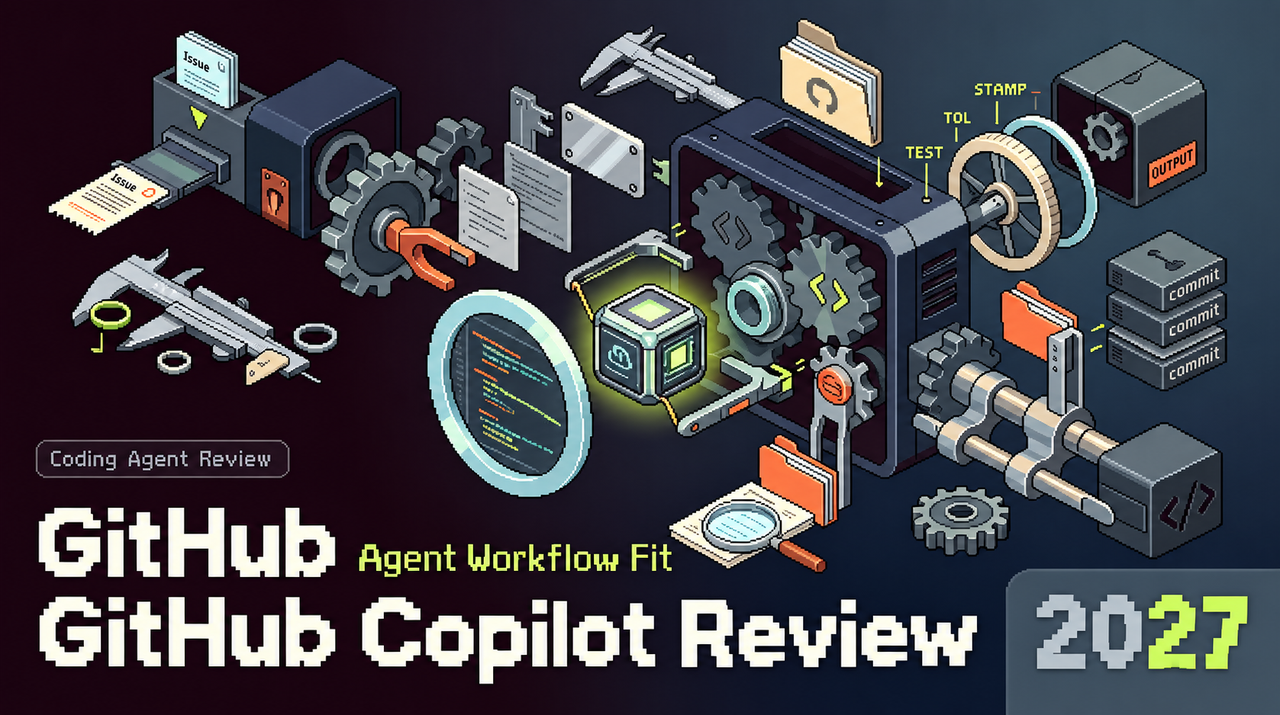
| GitHub Copilot cloud agent | Bounded repository tasks that end in reviewable changes | Organization policy can limit eligible repositories; a session can be steered or stopped | Session logs and signed commits trace work; stopping preserves commits already pushed, so inspect the branch |
| Claude Code | Interactive or scripted repository work that benefits from a resumable local session | Plan and tool allow/deny settings, maximum turns, and permission modes are configurable | Diffs, tests, and verbose output are available; It is not a built-in recurring-job service |
| GitHub Agentic Workflows | Low-frequency, event- or schedule-driven repository operations | Workflow frontmatter declares triggers, repository permissions, and permitted write outputs | GitHub documents isolated GitHub Actions environments in public preview; budget Actions and model use separately.; budget Actions and model use separately |
The matrix is deliberately uneven: a 59-minute coding run and a weekly report are not interchangeable. Usage may be metered by task, credit, model, or Actions minutes. At this check date, Copilot Pro is $10/month; Claude Pro, which includes Claude Code, is $20/month in the U.S.; Manus Pro starts at $20/month. Model choice, retries, context, and overage policy can matter more.
Best Autonomous AI Agents by Run Horizon
For Hours-Long Research and Deliverables
ChatGPT Work fits a cloud project that spans apps and files before producing a document. Its public guidance says it can stay with a project for hours, and scheduled-task controls provide pause, edit, and approval paths. The practical question is which connected apps are necessary, and which must remain unavailable.
Manus is the candidate when a recurring artifact should stay in the same task or Project. Its documentation says a run can continue from prior instructions, files, conversation, and results, or start separately. That continuity also preserves stale instructions. Start with a read-only report or draft folder, not an inbox or a spending-enabled account.
For Recurring Operational Work
For recurring operations, favor a system that shows upcoming and prior runs plus the exact prompt or configuration. Manus exposes schedules and past runs; ChatGPT provides a Scheduled view and can pause actions needing approval. GitHub Agentic Workflows keep triggers, permissions, and allow outputs in versioned files.
The buying test is not “can it run daily?” It is “what happens after a stale credential, missing source, or changed owner?” Use staging with an expired token and protected write target. Require a named failure, preserved partial artifact, and no retry that silently widens permissions. That is closer to the operational discipline in the UK government’s 2025 AI Cyber Security Code of Practice than a feature checklist.
For Development and Repository Tasks
GitHub Copilot cloud agent belongs here when the handoff is a branch, pull request, session log, and tests. Its current documentation says an operator can steer a session and stop it; commits already pushed remain, which is why “stop” is a control, not a rollback. Repository eligibility can also be restricted at organization level.
Claude Code fits a developer’s terminal and repository, with tool permissions, maximum-turn limits, and resumable sessions. It is not a recurring-job service merely because it can take many steps. GitHub Agentic Workflows fit that use case better, but need deliberate triggers, safe outputs, secrets, and an owner for each issue or pull request.
Control and Recover a Run When Conditions Change
I use four gates: scope before start, approval before external change, a checkpoint while running, and acceptance review at the end. Scope names folders, repositories, sources, budget, timeout, and prohibited actions. Require approval for sending, publishing, purchasing, deleting, merging, or changing access. Review in the native system, not only the transcript.
Ask what remains when a run fails: partial artifact, log, session ID, diff, test output, and status. Then test revoked credentials, exceeded budget, denied writes, timeouts, and conflicting instructions. The OWASP Top 10 for Agentic Applications is a timely reason to keep those gates visible.
Account for Supervision and Operating Cost
Supervision cost is time spent setting scope, checking progress, repairing failures, and accepting results. A short sensitive task may deserve more review than a long low-risk report. A routine job becomes cheaper to supervise only after several reviewed runs, stable inputs, and an exception policy.
Estimate subscription, model or credit consumption, execution minutes, connector or Actions cost, storage, and human review. Set a spend ceiling, timeout, and concurrency limit where supported. For EvoX Beta, confirm current Gateway, quota, and credit treatment rather than assuming one balance pays for everything.
Choose the Right Autonomy Boundary
Choose ChatGPT Work or Manus when the durable value is a research-to-deliverable task and a team can review cloud context and connected apps. Choose GitHub Copilot cloud agent, Claude Code, or GitHub Agentic Workflows when the durable value is a versioned repository change with tests. Consider EvoX when local computer work and reusable local experience are central, but make its Beta controls pass the same staging test before extending its authority.
My starting boundary would be modest: one named workspace, read-only access first, a single deliverable, a visible budget, and one external action that must be approved. If that run can be stopped and later explained without guesswork, then it may be ready to become persistent.
FAQ
Can Autonomous Jobs Be Tested in a Staging Workspace?
Yes. Use synthetic files, a disposable repository or sandbox account, a denied write target, and an expired credential. Check state, approval, error record, and whether a second operator can inspect the result. A successful demo is not a production test.
Can an Operator Transfer Ownership of an Active Run?
Do not assume so. Sharing a schedule, viewing a session, and taking over an active run are different permissions. ChatGPT can create a separate shared-task copy, and GitHub can expose logs, but neither proves live ownership transfer. Confirm roles, notifications, and session control before relying on handoff.
Can an Autonomous Agent Work in Right-to-Left Language Interfaces?
Possibly, but language support is not evidence that task panels, approval dialogs, logs, and artifacts work well in RTL. I found no common documented commitment across this shortlist. Test the production build with an RTL locale and keyboard workflow.
Can an Autonomous Agent Preserve File Version History?
Repository agents can leave commits and pull requests, but that does not document track changes or comments. Require versioned outputs and compare them in the native editor. Treat document version preservation as unverified until the fixture proves it.
Does the Run Dashboard Support Screen Readers?
Do not infer accessibility from the existence of a dashboard. I found no uniform public screen-reader commitment for every candidate. Test keyboard-only navigation, progress updates, permission prompts, stopped states, and error recovery with the intended assistive technology.
Previous Posts:
- If you are deciding what “autonomous” really means beyond multi-step prompting, Gemini Spark vs AI assistant compares background continuity, scheduled work, connected actions, approvals, and what remains active after the conversation ends.
- For autonomous work that crosses files and desktop applications, GPT-6 Astra desktop agent examines computer use, cross-app execution, permissions, recovery, and operator intervention around one fixed deliverable.
- If you need to distinguish persistent cloud agents from local computer workers before choosing a product, AI coworker vs desktop agent explains how work surfaces, memory, connected tools, computer access, and user control differ.